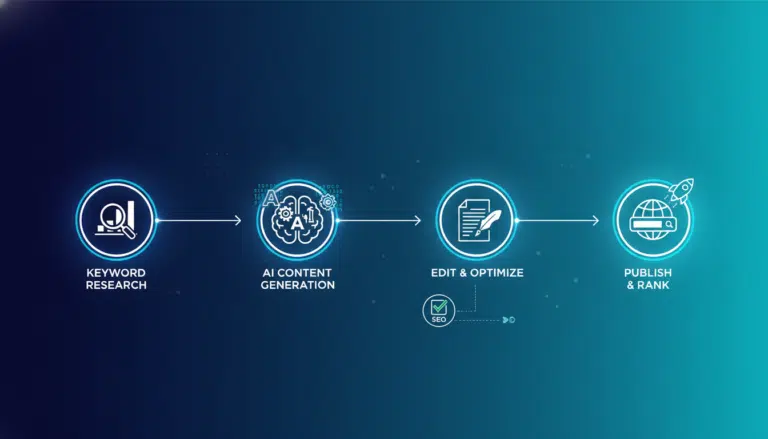
How to Humanize AI Content for SEO: 7 Proven Steps
AI tools have completely transformed how modern bloggers and digital marketers produce content. However, publishing raw, unedited AI output can quickly lead to flat rankings, low engagement, and search engine quality penalties. If you want your content to perform on search engines, learning how to humanize AI content for SEO is no longer optional.
In this guide, you will discover a complete 7-step process to transform robotic AI drafts into high-ranking, helpful articles that engage human readers and satisfy search engine algorithms.
Featured Snippet: What Does It Mean to Humanize AI Content for SEO?
To humanize AI content for SEO means refining AI-generated text by adding original insights, personal experience, structured formatting, and natural language patterns. This process eliminates repetitive phrasing, enhances EEAT signals (Experience, Expertise, Authoritativeness, and Trustworthiness), and aligns content with search intent to ensure high Google rankings.
Why You Must Humanize AI Text for Search Engines
Search engines like Google have made their stance very clear. According to the Google official Search Guidance on AI content, search algorithms reward helpful, high-quality content regardless of how it is produced. Google focuses on rewarding content that displays high EEAT standards rather than penalizing the tool used to create it.
However, raw AI drafts consistently fail on key user engagement metrics. Unedited AI articles often suffer from three major drawbacks:
- Repetitive vocabulary and structure: AI models frequently rely on predictable transition phrases like “in today’s digital landscape” or “delve deeper into.”
- Lack of real-world experience: Large language models synthesize existing information without personal perspective, first-hand data, or original testing.
- High bounce rates: Readers quickly recognize generic text and bounce back to search results, sending negative user signals to search algorithms.
When you refine your draft using proven ai content humanization techniques, you bridge the gap between AI efficiency and human authenticity. If you want to see how raw AI compares when tested against popular detectors, check out our detailed Byword AI detection test results and our GPTZero AI detector evaluation.
7 Steps to Humanize AI Content for SEO Success
By following a structured ai writer workflow for bloggers, you can quickly polish any AI-generated article into a ranking asset. Here are the 7 practical steps to follow every time you generate a new draft.
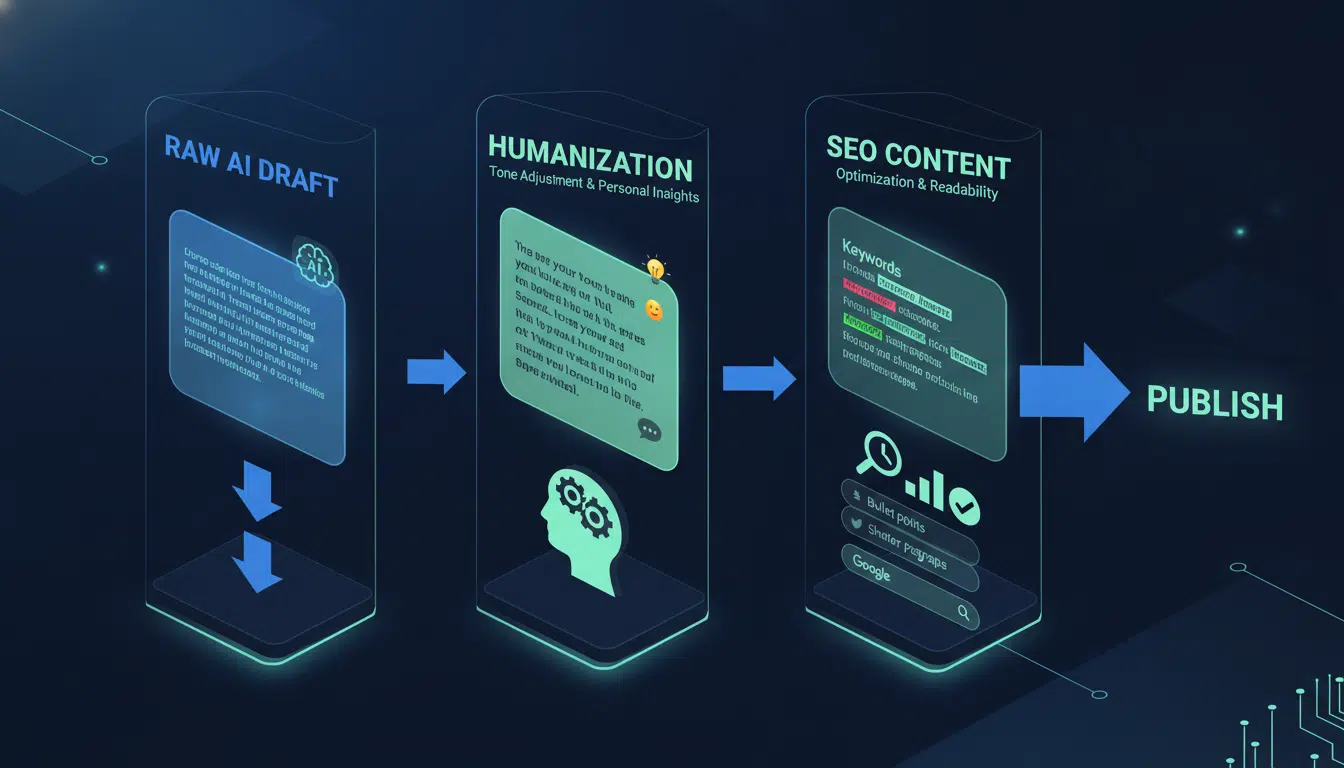
1. Inject First-Person Perspective and Real Examples
AI writers cannot test a tool, purchase a product, or run an experiment. To make your content authoritative, insert your personal observations, case studies, or actual screenshot evidence into the text.
For example, instead of writing “Software X is easy to set up,” explain “During our 14-day trial of Software X, we configured the dashboard in under five minutes with zero technical glitches.” Specific anecdotes instantly make the article authentic and trustworthy.
2. Eliminate Repetitive AI Clichés and Buzzwords
Every language model has linguistic habits. Words like game-changer, tapestry, beacon, paramount, navigate, and delve are classic signs of AI generation. Scanning your document for these fluff words and replacing them with clear, direct terminology improves readability.
A recent Ahrefs study on AI written content highlighted that readers drop off significantly when articles rely on vague generalizations instead of concrete advice. Keep your sentences concise (under 20 words) and vary paragraph lengths between 2 and 4 sentences.
3. Optimize Headings and Match Search Intent
Search engines evaluate content hierarchy to understand topic coverage. Ensure your H2 and H3 tags naturally contain secondary target terms such as how to rank AI content on Google and bypass AI detectors for SEO.
Structure your article logically so readers find immediate answers to their core queries. Use bullet points, bold key phrases, and numbered lists to make the article skimmable for mobile visitors.
4. Integrate Proprietary Data and Internal Links
Search algorithms favor articles that connect logically to other resources on your website. Linking to existing topical hubs builds contextual authority. For instance, if you are selecting content creation platforms, review our guide to the top AI copywriting tools or read our in-depth ZimmWriter review for specialized content generation workflows.
5. Adjust Sentence Burstiness and Perplexity
AI detectors analyze two primary metrics: perplexity (a measure of vocabulary randomness) and burstiness (variation in sentence length and structure). Human writers naturally mix short punchy sentences with longer complex explanations.
To increase burstiness, intentionally interject short one-line statements. Break up monotonous compound sentences. This variation makes your writing far more engaging for real readers while smoothing out statistical patterns that trigger AI detection filters.
6. Verify Facts and Citations Thoroughly
Hallucinations remain a common issue across generative models. AI tools may cite outdated statistics, incorrect dates, or non-existent studies. Always verify every statistic, claim, and quote against primary external sources before publishing.
7. Use Humanizing Prompts or Specialized Tools
If you generate content using ChatGPT or Claude, customize your system prompts. Instruct the AI to “write in a conversational tone, avoid passive voice, omit generic introductory phrases, and write from the perspective of an experienced digital marketer.” Alternatively, run your initial draft through dedicated humanizer tools to smooth out robot-sounding transitions.

Comparing Raw AI Content vs. Humanized AI Content
To understand why this process works, let us examine the core differences between unedited AI drafts and fully humanized SEO content:
| Metric / Feature | Raw AI Draft | Humanized AI SEO Content |
|---|---|---|
| EEAT Signals | Low (generic facts only) | High (personal experience & screenshots) |
| Vocabulary Variety | Predictable & repetitive | Natural & diverse |
| Search Intent Alignment | Surface level | Deep, actionable, and intent-focused |
| User Bounce Rate | Higher (readers leave quickly) | Lower (engaging formatting & visuals) |
| AI Detector Score | Triggers AI flags | Passes human readability checks |
Frequently Asked Questions
Does Google penalize AI-generated content?
No, Google does not penalize content simply because it was created with AI. Google rewards helpful, high-quality content created primarily for users, regardless of whether it was written by humans or machines. However, low-quality AI spam designed purely to manipulate search results will be penalized.
How do I bypass AI detectors for SEO?
You can bypass AI detectors for SEO by varying your sentence structure, adding personal anecdotes, removing overused AI transitions, and editing for natural flow. Focusing on genuine reader value and original research naturally makes your content pass AI detection checks.
What are the best ai content humanization techniques?
The most effective ai content humanization techniques include restructuring repetitive paragraphs, adding custom images or infographics, incorporating real-world data, writing from a first-person perspective, and trimming unnecessary filler words.
How long should it take to humanize an AI draft?
For a standard 1,500-word article, expect to spend 30 to 45 minutes humanizing the draft. This time includes fact-checking, inserting internal links, rewriting repetitive headings, and adding custom media assets.
Conclusion: Master Your AI SEO Workflow Today
Learning how to humanize AI content for SEO is the single most valuable skill for modern content creators. AI gives you speed and scale, but your human perspective, editorial judgment, and strategic optimization deliver rankings and revenue.
Ready to supercharge your affiliate blog? Start applying these 7 steps to your upcoming drafts today. For more proven strategies on scaling your online business, explore our latest reviews and tutorials on top blogging tools and start building your high-ranking content machine!