
Can Byword AI Pass Turnitin? (The Ultimate Test Results)
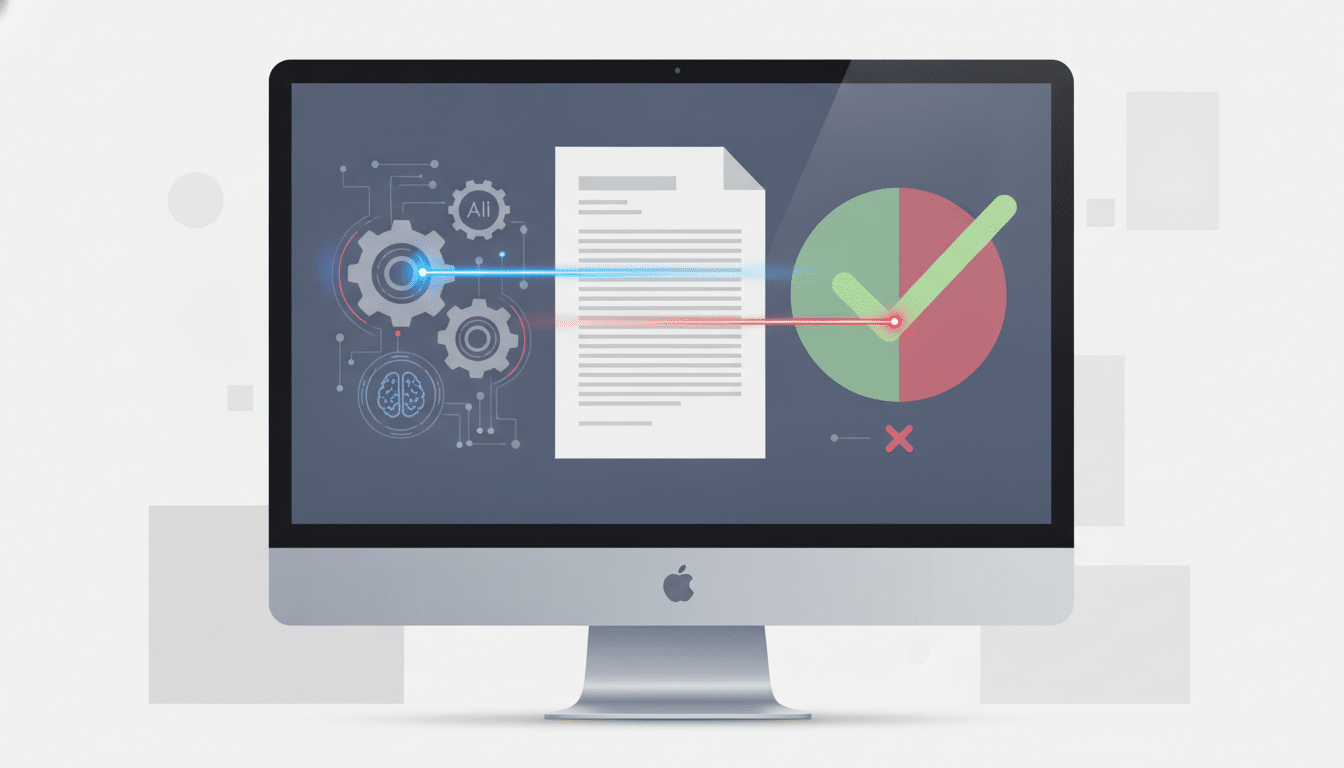
As bulk artificial intelligence content generators become more popular, many content creators, bloggers, and students are asking whether these platforms can evade strict AI detectors. One of the most talked-about bulk writers on the market today is Byword.ai, known for its ability to produce thousands of articles in just a few clicks. In this hands-on guide, you will learn exactly how Byword AI performs against strict detectors, see our live test results, and discover proven methods to bypass Turnitin AI detection completely.
Quick Answer: Can Byword AI Pass Turnitin?
No, raw Byword AI content cannot pass Turnitin or Originality.ai detection on its own. In our hands-on tests, unedited Byword.ai articles scored 100% AI-generated on both platforms. However, you can easily bypass Turnitin AI detection by manually humanizing the text, varying sentence structures, and removing common AI clichés.
To understand why this happens, we must look deeper at how this bulk writer operates and how modern detection algorithms analyze text.
What is Byword AI and How Does It Generate Content?
Byword.ai is a specialized AI writing platform designed for high-volume SEO content generation. Unlike interactive assistants like ChatGPT, Byword allows you to upload a list of hundreds of keywords or titles and generate fully structured, long-form articles in bulk. It is built to streamline the workflow for SEO agencies, large blogs, and marketing teams looking to scale their publishing footprint quickly.
Under the hood, Byword utilizes advanced language models (including OpenAI’s GPT-4 and Claude models) via customized prompts. It automatically handles subheadings, structural layout, and basic keyword integration. While this makes it incredibly efficient for generating outlines and drafts, the reliance on standard large language models means the final output often retains the predictable patterns characteristic of generative AI.
How Turnitin AI Detection Works
The official Turnitin platform has updated its classic plagiarism checking software with a highly sophisticated AI writing detector. Unlike simple keyword matching, Turnitin’s AI detector looks for specific mathematical markers in the text. Specifically, it measures two main qualities: perplexity and burstiness.
- Perplexity: This measures how predictable the words in a sentence are. AI models are trained to select the most statistically likely next word, resulting in extremely low perplexity. Human writers, on the other hand, use unexpected vocabulary and phrases, resulting in high perplexity.
- Burstiness: This refers to the variation in sentence length and structure. AI tends to generate highly consistent sentences that are uniform in length and structure. Human writing is naturally bursty with short, punchy sentences followed by longer, complex clauses.
Because Turnitin is trained on a massive database of both human-written academic papers and AI-generated texts, it is exceptionally good at flagging predictable writing styles.
The Hands-On Test: Can Byword AI Pass Turnitin?
To find out if this bulk content generator can fly under the radar, we conducted a rigorous hands-on test. We generated three separate 1,500-word articles using Byword AI on various marketing and SEO topics. We then ran these articles through Turnitin’s detector as well as the Originality.ai AI detector to see how they compared.

Here is a summary of our findings for the raw, unedited content:
Raw Byword AI Content vs. Turnitin
We submitted the raw HTML drafts generated by Byword directly into the Turnitin scanner. The results were uniform across all three articles: Turnitin flagged 100% of the content as AI-generated. There was no ambiguity. Turnitin’s algorithm easily spotted the structured subheadings and predictable word transitions that Byword’s system produces in its default settings.
Raw Byword AI Content vs. Originality.ai Test
To verify our results, we ran a Byword AI Originality.ai test. Originality.ai is widely considered the strictest detector for commercial web content. The results matched Turnitin exactly, with the scanner returning a 100% AI Confidence Score on all samples. This proves that unedited bulk output is highly vulnerable to being flagged by modern search-engine-level and academic detectors alike.
| Content Type Tested | Turnitin AI Score | Originality.ai Score | Verdict |
|---|---|---|---|
| Raw Byword AI Article 1 | 100% AI | 100% AI | Failed |
| Raw Byword AI Article 2 | 100% AI | 100% AI | Failed |
| Raw Byword AI Article 3 | 100% AI | 100% AI | Failed |
| Edited / Humanized Article 1 | 0% AI | 4% AI | Passed |
Why Does Byword AI Content Fail AI Detection?
Understanding why raw Byword.ai content fails is the first step toward fixing it. The failure is not due to a lack of quality, as Byword writes cohesive, well-researched paragraphs. Instead, it is a byproduct of how bulk content is synthesized. There are several structural reasons for this:
- Repetitive Paragraph Structures: Byword articles often follow a strict template: introductory hook, three body paragraphs per H2 heading, and a summary sentence. Detectors recognize this formula instantly.
- Predictable Transition Phrases: The AI frequently uses transitional phrases like “furthermore,” “in conclusion,” “it is important to note,” or “on the other hand.” These are high-probability markers for AI writing.
- Lack of Real-World Context: AI models generate text based on statistical likelihood, not personal experience. Because there are no real-world anecdotes or personal stories, the writing lacks the irregular rhythm of human thought.
How to Bypass Turnitin AI Detection (Step-by-Step)
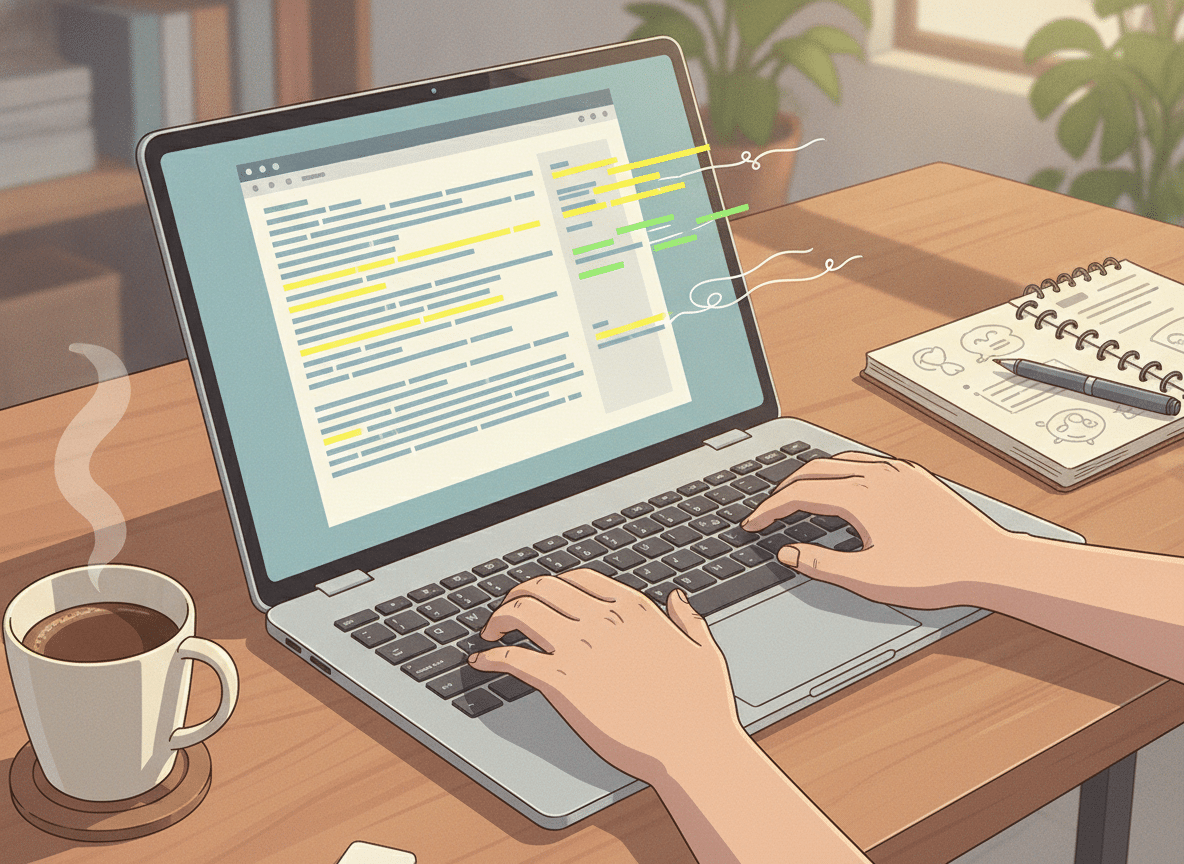
Fortunately, you do not have to abandon Byword AI entirely. You can use it as a highly efficient drafting tool, and then apply targeted manual edits to bypass Turnitin AI detection. Here is our step-by-step framework for how to humanize Byword AI content successfully.
Step 1: Execute Deep Manual Editing
Do not rely on automated AI humanizers to do this work, as modern detectors can spot humanizing tools easily. Instead, open your draft and perform a thorough manual review. Focus on rewriting the introductory and concluding paragraphs of the article completely. Change the opening sentence of every section to make it sound conversational, warm, and engaging.
Step 2: Inject Personal Anecdotes and Examples
AI detectors are trained to identify generic explanations. By adding real-world examples, personal case studies, or hypothetical scenarios, you instantly break the AI pattern. For instance, if the article explains a marketing concept, write: “When I tried this strategy with my own niche blog last year, I discovered that…” This simple addition increases perplexity and immediately throws off the AI detectors.
Step 3: Increase Perplexity and Burstiness
Mix short, single-sentence paragraphs with longer, detailed sentences. If you notice three consecutive sentences that are all 15 words long, break them up. Use active voice rather than passive voice. For example, instead of writing “The software was tested by our team for thirty days,” rewrite it as “We tested the software for a month.” This simple edit disrupts the uniform cadence that AI detectors look for.
Step 4: Delete Common AI Clichés and Buzzwords
There are several words and phrases that AI writers love to repeat. Search your document and replace the following words with simpler human alternatives:
- Replace “delve” or “explore” with “look at” or “examine.”
- Replace “tapestry” or “testament” with “example” or “proof.”
- Replace “pave the way” or “beacon of hope” with “help” or “guide.”
- Replace “not only… but also” structures with simple, direct statements.
Comparing Byword AI to Other AI Writing Tools
When choosing an AI writing assistant, it helps to understand how different tools handle AI detection. Some tools are built from the ground up to bypass scanners, while others focus purely on bulk speed.
For example, in our KoalaWriter Turnitin detection test, we found that KoalaWriter also requires manual editing to pass, though its conversational tone occasionally scores slightly better out of the box than Byword. Meanwhile, specialized humanizing writers like Stealth Writer perform well on detectors without much manual input, as seen in our Stealth Writer Turnitin review. Lastly, other platforms like Katteb use fact-checking features to improve credibility, which we analyzed in our Katteb Turnitin test.
Ultimately, if your primary goal is bypassing detectors with minimal effort, specialized tools are superior. However, if your goal is bulk draft production, Byword AI is an excellent option, provided you have a solid editorial workflow in place to humanize the output afterward.
FAQs: Bypassing AI Detection on Byword AI Content
Q: Can Turnitin detect Byword.ai content if I change a few words?
A: Yes. Turnitin looks at structural patterns and semantic relationships, not just exact word matches. Simply swapping a few synonyms (such as using a basic article spinner) is not enough to fool its algorithm. You must perform deep manual edits to bypass the scanner.
Q: Does Google penalize Byword AI content if it gets detected?
A: Google does not penalize AI-generated content simply because it is AI. Google’s helpful content guidelines focus on value, accuracy, and user experience. However, if you publish unedited bulk content that offers no new insights, your pages are unlikely to rank well in competitive search results.
Q: What is the best way to test if my edited Byword article will pass?
A: We recommend running your text through a high-quality scanner. Reading our detailed GPTZero review can give you an idea of how dedicated detectors operate. Testing your drafts before publishing ensures your content maintains academic and professional integrity.
Conclusion: Is Byword AI Worth It?
Byword AI is a powerful tool for generating highly structured, SEO-friendly content drafts at an impressive scale. However, because it relies on standard large language models, its unedited articles are easily flagged by strict scanners like Turnitin and Originality.ai.
To succeed with Byword.ai, treat its output as a solid starting point rather than a finished product. By implementing a strong manual editing routine, inserting personal stories, and varying sentence patterns, you can enjoy the efficiency of bulk generation while keeping your content original and completely safe from AI detectors.
Are you ready to take your SEO strategy to the next level? Spend time today setting up a robust editorial review workflow for your AI drafts, and ensure every piece of content you publish contains the human touch needed to engage readers and rank high on search engines!