Claude AI SEO Strategy: 7 Proven Steps to Rank in Claude
Artificial intelligence is fundamentally changing how people discover information on the web. As LLMs like Anthropic’s Claude become central to search workflows, ranking in AI-generated answers requires a brand-new playbook. Traditional keyword optimization alone no longer guarantees visibility in generative search engine results.
If you want your content cited by AI answer engines, you need to understand how large language models process and summarize information. In this guide, you will learn the exact 7-step Claude AI SEO strategy to optimize website for Claude AI, secure authoritative citations, and capture high-intent search traffic.
What Is Claude AI SEO Strategy and Why Does It Matter?
A Claude AI SEO strategy is the practice of structuring and optimizing website content so that Anthropic’s Claude model easily crawls, understands, and references your domain as an authoritative source. Unlike traditional search engines that rely purely on keyword density and backlink profiles, Claude evaluates factual accuracy, logical reasoning, and semantic clarity.
When users ask Claude complex research questions, the model synthesizes answers from its knowledge base and real-time web retrieval. Securing a spot in these generative answers positions your brand directly in front of highly qualified users who rely on AI for decision-making.
To build a robust search presence across all major platforms, combining this approach with an optimize for ChatGPT Search plan and a strong Perplexity SEO strategy ensures maximum coverage across AI answer engines.
Step 1: Establish Deep Topical Authority Across Core Clusters
Claude prioritizes content created by subject matter experts who demonstrate consistent coverage in a specific niche. Broad, generic sites struggle to compete against targeted resource hubs that explore topics from every angle.
To build topical authority for Claude AI content optimization, follow these fundamental principles:
- Map complete topic clusters: Group content into primary pillar pages and supporting cluster articles that cover every subtopic in depth.
- Answer core user questions directly: Solve explicit pain points within your niche using accurate definitions and step-by-step instructions.
- Maintain thematic focus: Keep your publishing strategy tightly aligned with your main site categories rather than publishing unrelated news.
When your site displays exhaustive coverage of a topic, AI retrieval systems recognize your domain as a primary reference source during query synthesis.
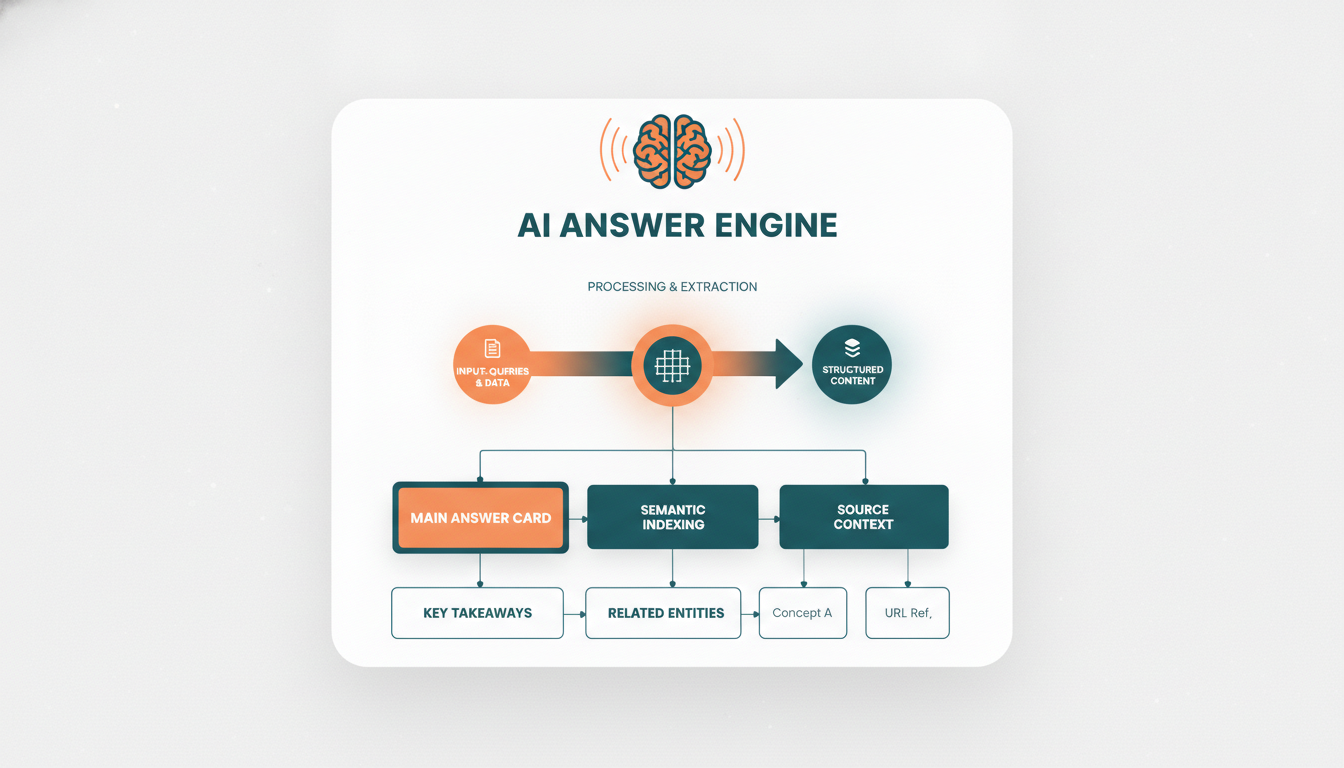
Step 2: Optimize for Semantic Clarity and Structured Data
AI models excel at digesting structured content with clear logical hierarchies. Formatting your pages cleanly helps Claude extract relevant paragraphs and display them directly in search responses.
Implementing Claude AI answer engine SEO requires specific formatting standards:
- Use explicit header tags: Organize your content logically with standard H2, H3, and H4 tags containing relevant semantic terms.
- Incorporate Schema markup: Use Schema.org structured data such as Article, FAQPage, HowTo, and Product schemas to help AI parsers understand entity attributes.
- Write direct lead paragraphs: Summarize core key takeaways immediately beneath section headings in concise 40-50 word blocks.
Structured formatting reduces ambiguity, making it easier for Claude to quote your pages directly in its generated answers.
Step 3: Master Generative Engine Optimization Principles
To succeed in AI search, creators must adopt a modern generative engine optimization framework. Generative Engine Optimization (GEO) focuses on enhancing content features that language models prioritize when generating responses.
Key GEO tactics for Claude include:
- Citation-rich explanations: Cite reputable external data points, industry standards, and primary research studies throughout your articles.
- Data tables and comparison charts: Present complex statistics, pricing options, and tool features in clean HTML tables that AI models can scrape easily.
- Clear entity definitions: Define core terms clearly using bold text and explicit conceptual descriptions near the top of sections.
By tailoring your content to align with LLM training objectives, you significantly increase the likelihood of appearing in generated citations.

Step 4: Publish High-Information Density Content
Claude penalizes fluff, repetitive fluff sentences, and low-value generic writing. AI models prefer high-information density pages that deliver maximum value in clean, readable prose.
When drafting articles, aim for maximum informational value:
- Eliminate filler words: Remove unnecessary introductory preamble and get straight to actionable solutions.
- Include original insight and data: Share proprietary case study data, original testing results, or unique expert opinions that cannot be found elsewhere.
- Refine AI content quality: If you utilize AI writing tools in your workflow, take time to humanize AI content for SEO by adding real-world nuance and editorial oversight.
Creating dense, original content ensures that AI models treat your domain as a primary information provider rather than a derivative distributor.
Step 5: How to Rank in Claude Citations Through Brand Mentions
Language models learn entity relationships from information published across the broader web. Learning how to rank in Claude citations involves building off-page digital footprint and third-party mentions.
To expand your off-page brand entity presence:
- Earn industry podcast and guest feature mentions: Ensure your brand, founder name, and core products are mentioned on authoritative niche publications.
- Build active profiles on community platforms: Participating in structured discussions on Reddit, Quora, and niche forums helps establish real-world brand association.
- Maintain consistent NAP and entity details: Ensure your organization name, address, website, and executive bios are uniform across all directories.
Strong off-page entity validation reinforces your site’s credibility, making Claude more likely to recommend your company to inquiring users.
Step 6: Align Content Strategy with Google AI Overviews
Many web retrieval systems powering conversational AI rely heavily on index data from major search engines. Integrating your overall approach with a Google AI Overviews SEO strategy creates powerful cross-channel synergies.
To optimize for both Google AI and Anthropic models simultaneously:
- Target question-based long-tail keywords: Identify transactional and informational queries starting with “how,” “what,” “why,” and “best.”
- Provide unambiguous expert answers: Answer the user’s primary query in the first paragraph before expanding into detailed nuances.
- Refresh legacy articles regularly: Keep factual statistics, dates, and software recommendations updated to remain relevant in live search indexes.
Content that performs well in traditional search crawlers provides the foundational training ground for modern AI citation systems.
Step 7: Track AI Visibility and Refine Content Continuously
Optimization is an ongoing process that requires constant monitoring and adjustments. Because AI response generation evolves rapidly, tracking your brand’s presence across conversational platforms is essential.
Best practices for tracking AI search performance include:
- Run weekly query prompts: Test target prompts in Claude periodically to check if your brand appears in recommendations or citations.
- Monitor referral traffic in analytics: Create custom web analytics segments to track referral visitors coming from AI platforms and direct LLM links.
- Update content based on AI gaps: Analyze the sources Claude cites for your top keywords and fill missing information gaps on your own pages.
By regularly auditing performance and updating content, you maintain a competitive advantage as AI search technologies mature.
Frequently Asked Questions About Claude AI SEO
How does Claude AI choose which sources to cite?
Claude chooses citations based on factual accuracy, semantic relevance, structured header clarity, authority metrics, and how directly the source answers the specific prompt query.
What is the difference between traditional SEO and Claude AI SEO?
Traditional SEO focuses on keyword density, backlink quantity, and technical crawler parameters. Claude AI SEO focuses on semantic entity coverage, structured content, factual density, and off-page brand reputation.
Can structured data help my website rank in Claude?
Yes. Implementing Schema.org structured data helps AI parsers identify key entities, author profiles, product attributes, and clear step-by-step instructions efficiently.
How often should I update my content for AI search optimization?
Updating core content every 3 to 6 months ensures your statistics, product details, and industry facts remain accurate for live web retrieval crawlers.
Conclusion and Next Steps
Mastering a Claude AI SEO strategy is one of the most effective ways to future-proof your organic search traffic. By focusing on deep topical authority, clear semantic structure, structured Schema markup, and high-density factual content, you position your brand at the forefront of AI search recommendations.
Start by auditing your top-performing articles, adding structured data markup, and optimizing key subheadings for direct answers. As conversational AI continues to expand, domains that prioritize structured expert knowledge will dominate the next generation of search engine results.