
Google AI Overviews SEO Strategy: 7 Steps to Rank in AIOs
Google AI Overviews have transformed how millions of users discover information online. By generating direct AI syntheses at the very top of Search Result Pages (SERPs), Google is reshaping organic search visibility. If your website is not appearing inside these AI snapshots, you are missing out on high-intent search traffic.
To win visibility in modern search results, you need a targeted Google AI Overviews SEO strategy. In this guide, you will learn seven actionable steps to optimize your content, earn direct citations, and future-proof your organic search rankings.
Quick Summary: How to Rank in Google AI Overviews
To rank in Google AI Overviews, publish clear direct answers of 40 to 55 words near the top of your articles, structure your content with precise H2 and H3 headings, implement Schema markup, cover topics comprehensively, and maintain strong domain authority and E-E-A-T signals.
What Are Google AI Overviews and Why Do They Matter?
Google AI Overviews (formerly Search Generative Experience, or SGE) use multi-modal Gemini models to assemble instant answers to complex queries. Instead of presenting a simple list of ten blue links, Google synthesizes information from multiple authoritative sources and cites them directly alongside the generated text response.
Securing a spot in these AI snapshots offers massive benefits for content creators and marketers:
- Prime SERP Real Estate: AI Overviews sit above traditional organic rankings and featured snippets.
- Higher Conversion Quality: Users clicking citation links in AI Overviews possess specific intent and high engagement.
- Brand Authority: Being cited by Google as a trusted source reinforces topical authority in your niche.
To succeed here, content creators must adapt their approach. Combining traditional search tactics with a broader generative engine optimization strategy ensures your site remains visible across all AI search interfaces.
Key Google AIO Ranking Factors
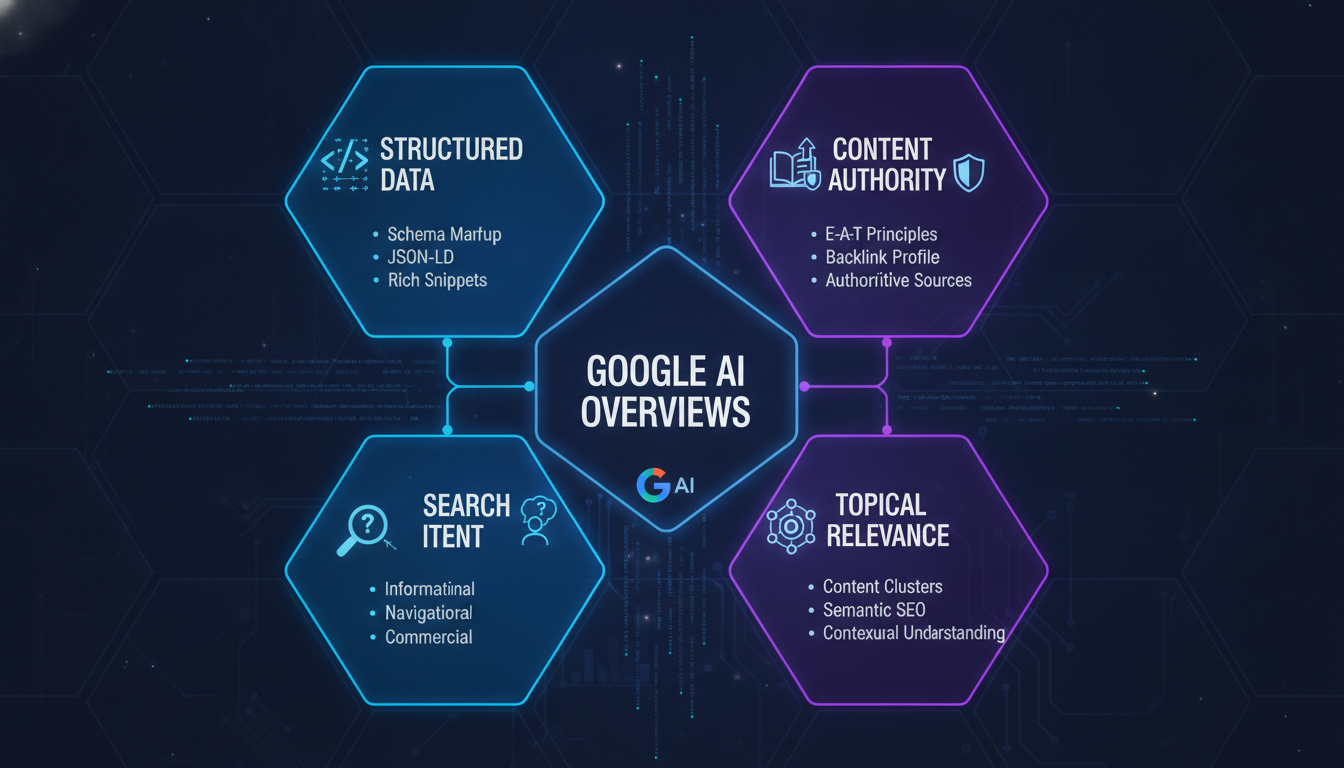
While traditional SEO focuses on keyword placement and backlinks, Google AIO ranking factors prioritize semantic understanding, structural clarity, and source trust. Google’s algorithms look for content that can be easily parsed, verified, and synthesized by large language models.
Key elements that influence AI Overview inclusion include:
- Information Density: Concise, fact-filled paragraphs without fluff or repetitive filler.
- Structural Readability: Logical heading hierarchies, bulleted lists, and structured tables.
- Topical Completeness: Answering primary questions along with secondary user intent.
- E-E-A-T Compliance: Demonstrating original research, real expert insights, and verifiable credentials.
According to the official Google Search Central guide on succeeding in AI search, webmasters should focus on creating unique, helpful content that directly addresses user queries rather than attempting to manipulate algorithmic shortcuts.
Step 1: Target Question-Based and Long-Tail Queries
Google AI Overviews trigger most frequently on complex queries, comparisons, and multi-step questions. Informational searches such as “how to,” “best methods for,” or “why does” trigger AI summaries far more often than simple single-word navigational searches.
To capture these opportunities, identify long-tail keywords and natural language questions using tools like Google Search Console, AnswerThePublic, or Semrush. Target user questions that require comprehensive synthesis.
Step 2: Structure Content for AI Extraction
Large language models digest structured data much faster than unstructured text walls. To maximize your chances of earned AI search citations, format key takeaways using bullet points, numbered lists, and comparative tables.

Implement the following structural guidelines:
- Use Concise Lead Paragraphs: Follow every H2 heading with a 2 to 3 sentence direct summary before expanding into detailed explanation.
- Incorporate Tables: When comparing features, prices, or workflows, use clean HTML tables.
- Highlight Entities: Use explicit entity names, technical terms, and precise data points.
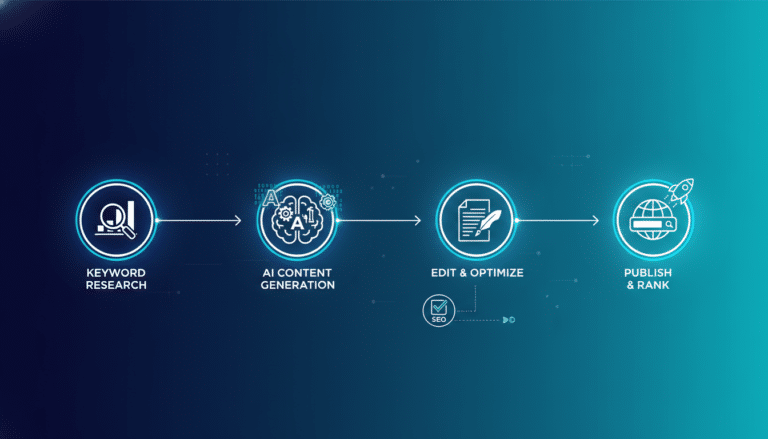
If you are building an automated content engine, check out our comprehensive AI content workflow for SEO to streamline your content production while preserving structural clarity.
Step 3: Write Direct Answer Boxes for Featured Snippets
There is a strong correlation between content featured in traditional Google snippets and content cited in AI Overviews. Studies such as the Rank Math study on ranking in AI Overviews show that pages ranking in top organic positions or featured snippets have a significantly higher probability of being cited in AI Overviews.
Place a dedicated definition or direct answer block (40 to 55 words) directly below main subheadings. Make sure your answer is self-contained, grammatically accurate, and directly answers the core prompt.
Step 4: Enhance E-E-A-T and Original Research
AI search models are engineered to filter out generic, low-quality content. To stand out, inject Experience, Expertise, Authoritativeness, and Trustworthiness (E-E-A-T) into every article.
Include original data, custom screenshots, expert quotes, and real-world case studies. When using AI writing assistants, ensure you humanize your articles to reflect authentic voice and real experience. Learn more about how to humanize AI content for SEO in our step-by-step guide.
Step 5: Implement Advanced Schema Markup
Structured data provides search engines with explicit information about your page content. While Schema markup alone will not guarantee an AI Overview spot, it helps Google parse entities and relationships accurately.
Incorporate the following Schema types on your site:
- Article / BlogPosting Schema: Defines the headline, author, publication date, and main entity.
- FAQPage Schema: Formats questions and answers for direct indexing.
- HowTo Schema: Highlights sequential steps for instructional content.
Step 6: Expand Topical Coverage and Semantic Context
To win citations across multiple AI Overview variations, build comprehensive topical clusters. Cover related subtopics, answer follow-up questions, and include relevant secondary entities.
For example, if you are targeting conversational AI search engines, you should also apply strategies tailored to platforms like Perplexity. Explore our guide on Perplexity SEO strategy to optimize for alternative generative search engines alongside Google.
Step 7: Optimize Technical Performance and Crawlability
Google needs fast, frictionless access to render and index your content. Ensure your technical SEO foundation is solid:
- Fast Page Speed: Optimize Core Web Vitals to prevent slow rendering.
- Mobile Responsiveness: Ensure layout and text rendering are flawless on mobile screens.
- Clean Crawl Path: Verify that your robots.txt file permits access to Googlebot and relevant AI crawlers.
Frequently Asked Questions
What is a Google AI Overviews SEO strategy?
A Google AI Overviews SEO strategy is a systematic approach to optimizing web content so that Google’s AI models summarize and cite your pages at the top of search result pages.
How do I get cited in Google AI Overviews?
You can get cited in Google AI Overviews by providing direct 40 to 55 word answers to search queries, structuring content with clear headings and bullet lists, building topical authority, and maintaining strong E-E-A-T signals.
Do AI Overviews reduce organic website traffic?
While AI Overviews answer simple queries directly on the SERP, they send higher-intent referral traffic to cited sources. Pages featured as citations often experience increased click-through rates from qualified visitors.
How does AI Overview optimization differ from traditional SEO?
Traditional SEO emphasizes exact-match keyword targets and backlinks, whereas AI Overview optimization focuses on semantic search intent, structured answer blocks, entity context, and factual precision.
Conclusion and Action Plan
Mastering a robust Google AI Overviews SEO strategy is essential for maintaining organic search growth as Google shifts toward AI-first experiences. By focusing on concise answers, structured content, deep topical authority, and technical excellence, you position your website to capture high-value citations and traffic.
Start by auditing your top-performing articles, adding structured summary blocks, and optimizing for long-tail conversational queries today. To stay ahead of modern search algorithm updates, continue refining your content optimization across all AI search channels.